Liar, Liar, Pants on Fire by Errol Morris makes a bold claim. The first two sentences sums up his view very well.
Pictures are supposed to be worth a thousand words. But a picture unaccompanied by words may not mean anything at all.
He goes on and talks about how pictures cannot be true or false themselves, and must be put into context to make any sense. While nothing that he says in the article is incorrect, I don't feel like it accurately portrays photography (or any still images) as a medium. Take a look at the following image. Is it true or false?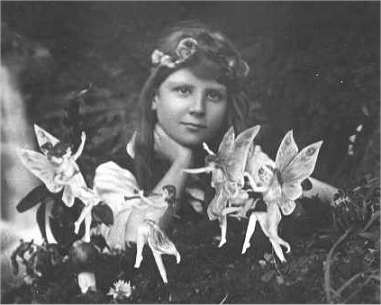
Even if you want to believe in fairies, you have to admit this photo is fake. This is, in fact, one of the first fake photos ever taken. Two girls borrowed a camera form one of their fathers, and took this photo with painted cardboard. This photo was taken with a specific intent (to "prove" fairies existed to their parents) and uses fallacious means of doing it. I believe that this photo can be called false (even though fake works better).
Despite that, I do believe that she was right in a lot of ways. It is true that looking at an image of The Lusitania without any context doesn't tell the whole story. In fact, most modern images gets it's context from society. 80 years down the line, somebody's going to look at a LOL cat and will have to have it explained to them because the same social constructions wouldn't exist. That being said, writing isn't the only way to convey a message. No one medium (especially images) is exempt from great story telling.

I would have to disagree about the photo you presented being false. You accompanied the photo with the story behind it giving it truth. If it came along with a story about a girl meeting real fairies (as she would have told her parents) or was captioned with something along those same lines, it would then be a falsehood. Therefore, we get back to the same point that the language surrounding the photograph determines it truth or its fallacy. The legitimacy of a photo has to do with its presentation and perception and what the presenter says about its purpose and story. A photo may be staged, doctored, or modified but it isn't true or false until it is given a written or spoken pretext.
ReplyDeleteMaybe I didn't word my thoughts well. Sure a narrative or a thought needs to be there for you to be able to say "true of false," but an image is more than capable of doing that for itself.
DeleteI thought you offered an interesting perspective. I don't know if that's what Morris meant by "false" but it was definitely different from many of the classmates.
ReplyDelete